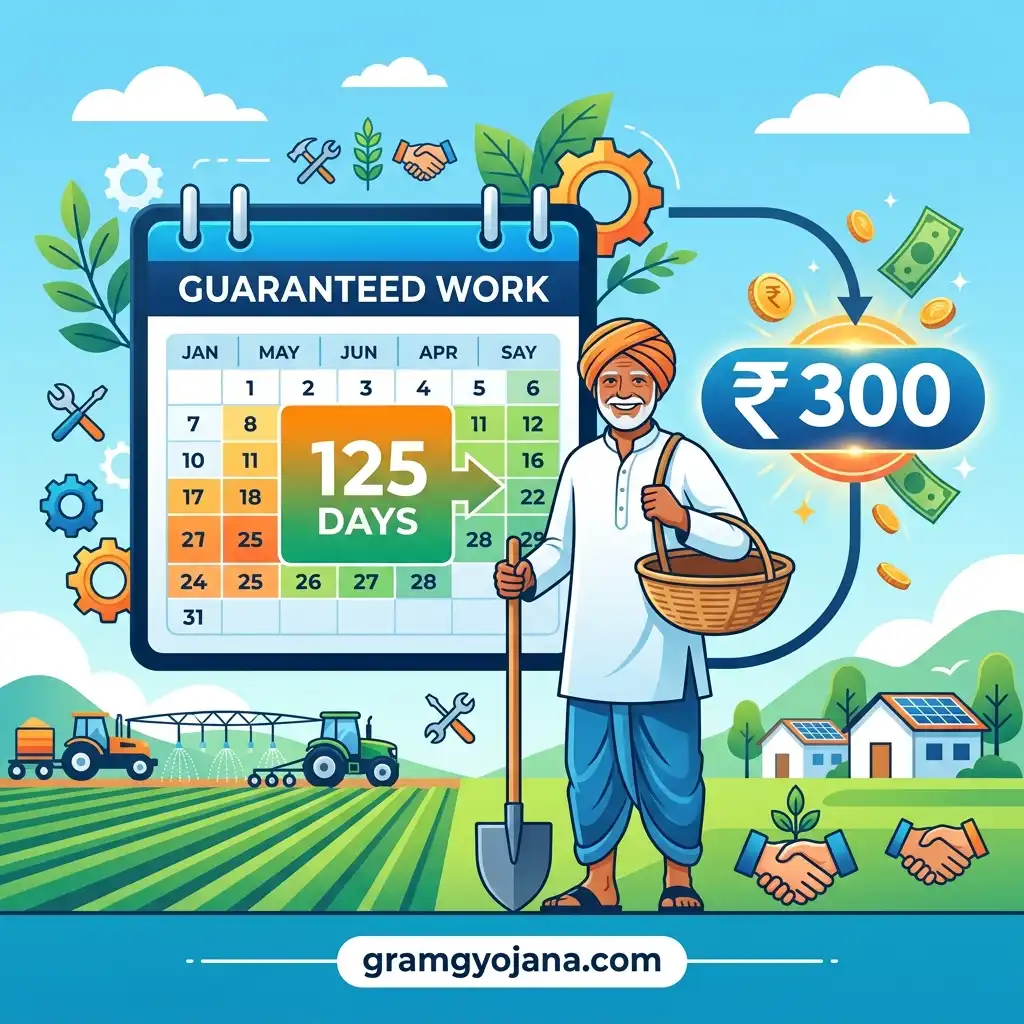
If you live in a rural area in India, you've probably heard the buzz around the villages lately. The old MGNREGA scheme that we've known for nearly two decades is officially a thing of the past. As of July 1, 2026, the government has rolled out something much bigger, better, and far more advanced: the VB-G RAM G Yojana.
But what exactly is this new scheme? How does it affect the common man, the daily wage earner, and the rural households that depended on the 100 days of guaranteed work? If you are confused about the new rules, the new Rs. 300 daily wage, or how to get the new "Gramin Rozgar Guarantee Card," you are in the right place.
In this comprehensive, easy-to-understand guide, we will break down every single detail about the Viksit Bharat Guarantee for Rozgar & Ajeevika Mission (Gramin). We will look at the new 125-day work rule, how the payment system has been completely digitalized to stop corruption, and what you need to do right now to ensure your family's livelihood is secure.
1. What is the VB-G RAM G Yojana?
First things first, let's understand the full form. VB-G RAM G stands for Viksit Bharat – Guarantee for Rozgar & Ajeevika Mission (Gramin).
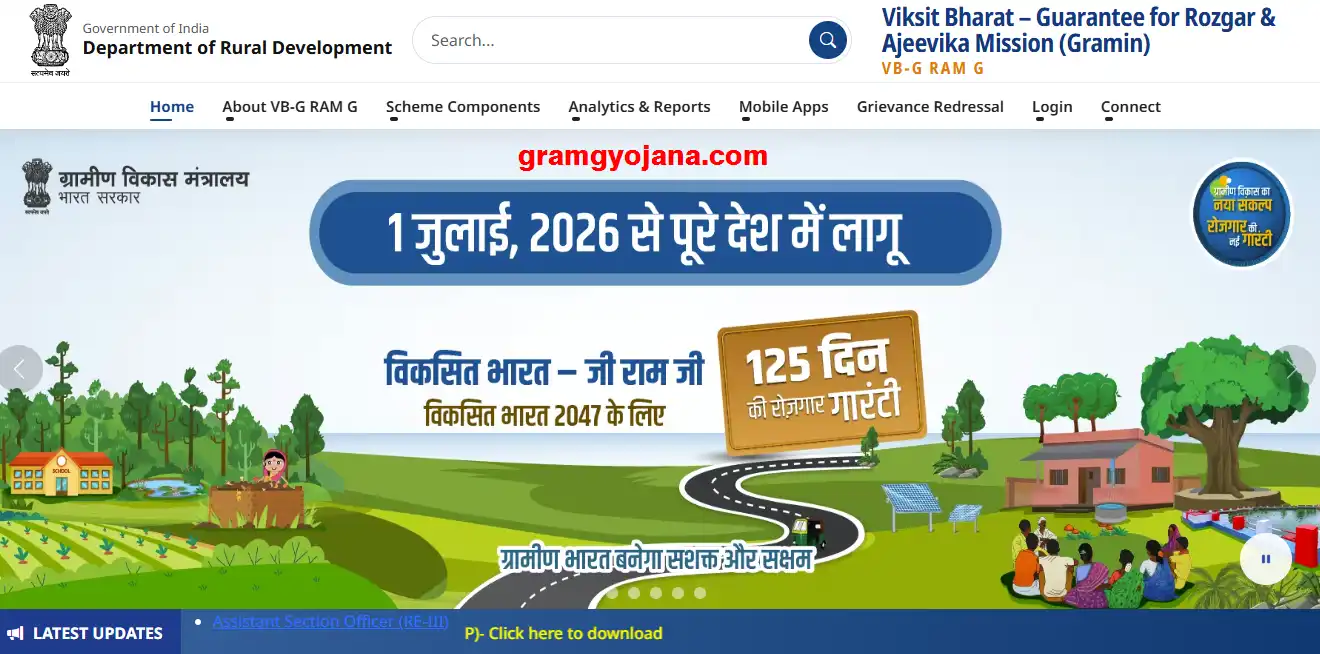
Passed by the Parliament in December 2025 and officially launched nationwide on July 1, 2026, this scheme is the spiritual successor to the Mahatma Gandhi National Rural Employment Guarantee Act (MGNREGA) of 2005. But calling it just a "replacement" would be an understatement. It is a complete overhaul of how rural employment is handled in India. You can verify this information on the Official Government Portal.
The government realised that while the old system provided a safety net, it had flaws. There were complaints of delayed payments, ghost workers, poor quality of assets created, and sometimes, a lack of alignment with actual agricultural seasons. The VB-G RAM G Act, 2025 fixes these issues by aligning rural employment with the grand vision of Viksit Bharat @2047. The focus has shifted to building durable, long-lasting assets in the villages—like water harvesting structures, proper roads, and climate-resilient infrastructure.
MGNREGA vs. VB-G RAM G (Key Differences)
| Feature | MGNREGA (Old) | VB-G RAM G (New) |
|---|---|---|
| Work Guarantee | 100 Days / Household | 125 Days / Household |
| Minimum Wage Floor | Varied greatly by State | Rs. 300 / Day Interim National Base |
| Peak Agriculture Season | Works continued, hurting farmers | 60-Day Suspension to help farmers |
| Job Card | Standard Job Card | New Gramin Rozgar Guarantee Card & Special Cards |
| Attendance | Paper Muster Rolls (High fraud) | Biometric & e-Muster Rolls (Zero fraud) |
The Biggest Game Changer: 125 Days of Guaranteed Work
Under the old MGNREGA rules, every rural household was legally entitled to 100 days of unskilled manual work. Now, under VB-G RAM G, every eligible rural household is legally guaranteed 125 days of wage employment in a single financial year. That is an extra 25 days of guaranteed income!
2. The New Rs. 300 Minimum Daily Wage Rule
One of the biggest pain points with rural employment schemes in the past was the wage rate. In many states, the daily wage was too low to sustain a family given the rising inflation and cost of living.
With the launch of the VB-G RAM G Scheme, the Central Government has stepped in and fixed a hard floor. They have introduced an interim national base wage of Rs. 300 per day.
- No state or Union Territory can pay less than Rs. 300 for a full day's work.
- State governments are free to pay more than this amount.
- The Act enforces the Equal Remuneration Act, 1976—meaning men and women will get the exact same pay for the exact same work. No gender discrimination.
3. Who is Eligible for the Scheme?
The eligibility criteria have been kept simple to ensure that the poorest of the poor can access it without bureaucracy:
- Rural Residency: You must be a resident of a rural area (Gram Panchayat).
- Adult Status: The applicant must have completed 18 years of age.
- Willingness to do Unskilled Manual Work: No special degrees or diplomas are needed.
Note: The guarantee of 125 days is per household, not per individual.
4. The "Special" Gramin Rozgar Guarantee Card
The government understood that expecting an elderly person or a person with a disability to dig hard soil at the same pace as a youth is unfair. Therefore, they introduced the Special Gramin Rozgar Guarantee Card (see our full guide on how to apply for the Job Card here).
This distinct card is issued to vulnerable groups, including:
- Single Women (widows, divorced, or unmarried women living alone)
- Persons with Disabilities (PwD)
- Senior Citizens (Above 60 years of age)
- Released Bonded Labourers
- Particularly Vulnerable Tribal Groups (PVTGs)
- Transgender Persons
Holders of this card are provided with suitable, lighter work but are still paid the full daily wage!
5. Unemployment Allowance & Delay Compensation
Unemployment Allowance: If you demand work and the government fails to provide it within 15 days, they must pay you an allowance. For the first 30 days, it is 25% of the wage (e.g., Rs. 75/day). After 30 days, it increases to 50% of the wage (e.g., Rs. 150/day).
Delay Compensation: If your wages are not paid within 15 days of the muster roll closing, you get a penalty payout of 0.05% of unpaid wages per day of delay. This is automatically calculated by the system and paid directly to your bank account.
6. The 60-Day Agriculture Suspension Rule
To solve the long-standing conflict between government public works and private agriculture, the new law introduces a highly practical 60-day work suspension period during peak agricultural seasons (sowing/harvesting). This ensures farmers get the labor they need, and workers can earn higher private wages during peak seasons while saving their guaranteed 125 days for the off-season.
How the VB-G RAM G Process Works
7. Technology & Transparency (Killing Corruption)
The VB-G RAM G Act is heavily driven by technology to eliminate corruption (ghost workers, middlemen, fake assets):
- No Contractors Allowed: Works must be executed directly by the Gram Panchayat.
- Biometric Attendance: Fingerprint or iris scans are required at the worksite.
- Geo-tagging: Every asset created is photographed with GPS coordinates.
- e-Muster Rolls: Digital attendance registers prevent paper tampering.
- Social Audits: Bi-annual mandatory audits by the Gram Sabha.
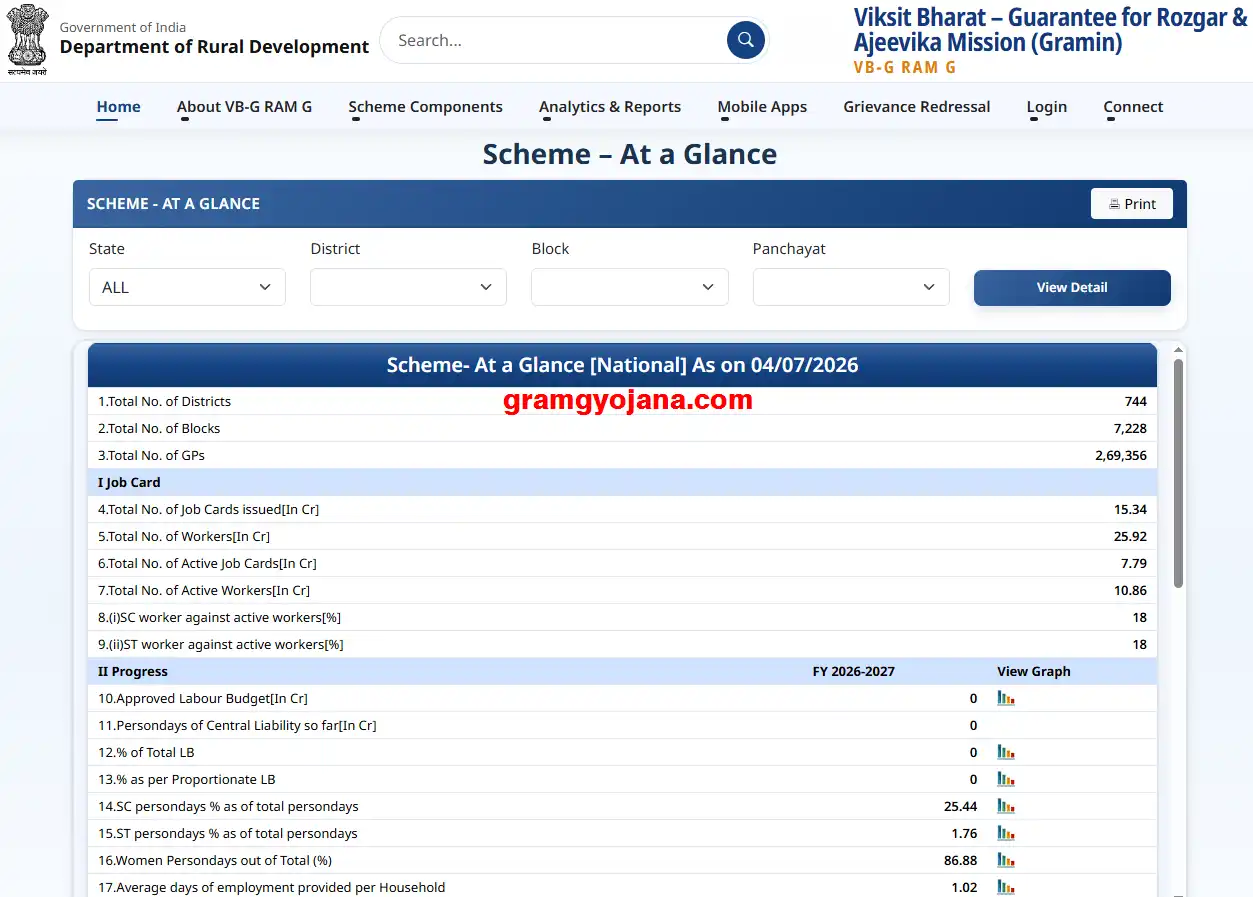
Scheme at a Glance
Frequently Asked Questions (FAQs)
Can I still use my old MGNREGA job card?
Will I get paid in cash?
Can a private contractor hire me for VB-G RAM G work?
Stay informed, demand your rights, and let's work together to build a truly Viksit Bharat!